
How to choose the right mylar bag for your product is the question most brands ask after getting it wrong the first time. A supplement company ordered 15,000 units last year based entirely on price per unit. The bags looked fine. The print was clean. Three months into their launch, customers were complaining about clumped powder and off-putting odors. The film specification the supplier used had an oxygen transmission rate 40 times higher than a proper foil laminate. The product was degrading in the bag before it reached anyone.
The supplier never mentioned the spec difference. The brand never asked.
This guide is the conversation that should have happened before that order was placed.
How to Choose a Mylar Bag Based on What Your Product Actually Needs
Before you look at formats, finishes, or price lists, the first question is about your product, not the bag. What is it sensitive to and how long does it need to stay in its original condition before the end customer opens it.
Oxygen Sensitivity
Products that oxidize, including roasted coffee, cannabis flower, dried herbs, protein powders, and most oil-containing foods, need a bag with an oxygen transmission rate below 0.1 cc per square meter per day. That is the threshold only a genuine aluminum foil laminate mylar structure consistently delivers. If your product goes flat, rancid, or loses potency when exposed to air, this number is the most important spec on the entire product sheet. Ask for it in writing before ordering anything.
Moisture Sensitivity
Hygroscopic products absorb moisture from the surrounding environment. Protein powder clumps. Cannabis flower either dries out or develops mold depending on ambient humidity. Dried fruit softens and ferments. The moisture vapor transmission rate of the bag determines whether any of that happens during the supply chain. A mylar foil laminate sits below 0.02 grams per square meter per day. Standard polyethylene sits at 8 to 15. That gap is not a small upgrade. It is a structurally different category of protection.
Shelf Life Target
Be realistic about how long your product will sit in a warehouse, on a truck, and on a retail or dispensary shelf before someone opens it. A product with a 90-day total journey needs different film specifications than a product designed for 18-month ambient storage. Matching the film to the actual shelf life requirement rather than the optimistic one saves money without compromising product integrity.
Mylar Bag Thickness Guide: What Mil Size Does Your Product Need
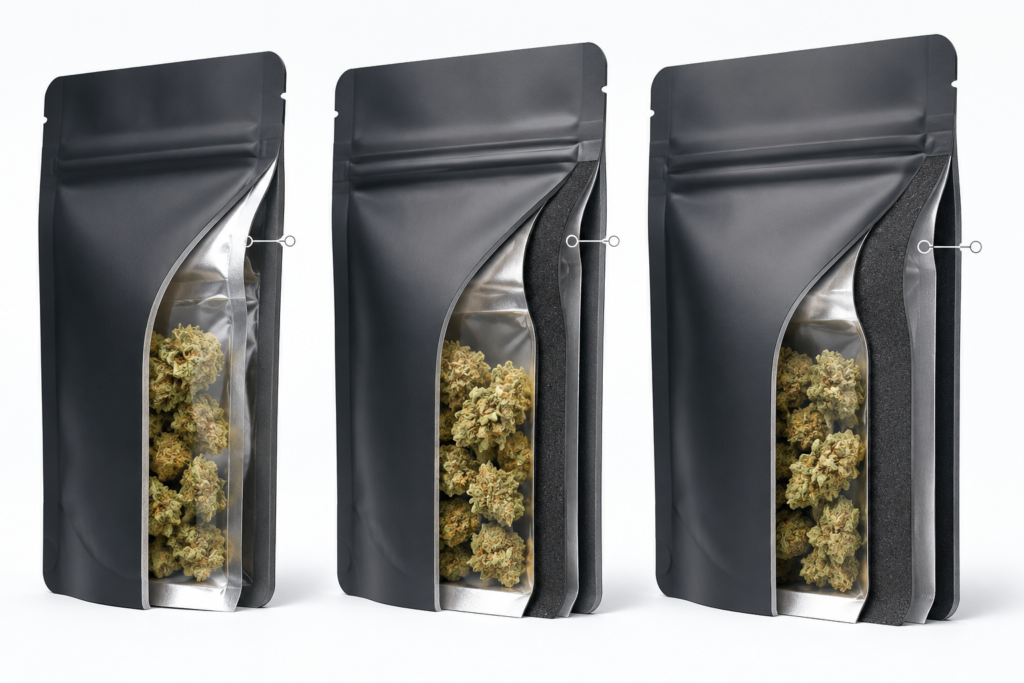
Mylar bags are measured in mils, which are thousandths of an inch. This single number affects barrier performance, puncture resistance, seal integrity, and how the bag feels in the customer’s hands. Most suppliers quote price without leading with thickness, which means two bags at the same price per unit can perform at completely different levels.
3.5 Mil
Appropriate for lightweight retail products moving through clean, short supply chains. Works well for sample packs, sachets, and single-serve retail products where the distribution journey is controlled and brief.
5 Mil
The most common professional specification across food, supplement, and cannabis applications. Covers the barrier and durability requirements for the majority of brands selling through retail, ecommerce, and dispensary channels. If you are unsure which thickness to start with, 5 mil is almost always the right answer for the first conversation.
7 Mil
Built for heavy products, rough distribution environments, or long-term storage applications of 12 months or more where puncture resistance and seal durability are non-negotiable. Industrial food storage, emergency preparedness products, and bulk supplement packaging commonly require 7 mil.
If a supplier cannot confirm the mil thickness of their film without checking, that is a signal about how much they actually know about what they are selling.
How to Choose the Right Mylar Bag Format for Your Sales Channel
Getting the film specification right and the format wrong still produces a problem. The format determines how the bag performs in the specific environment it will actually live in.
Stand-Up Mylar Bags for Retail
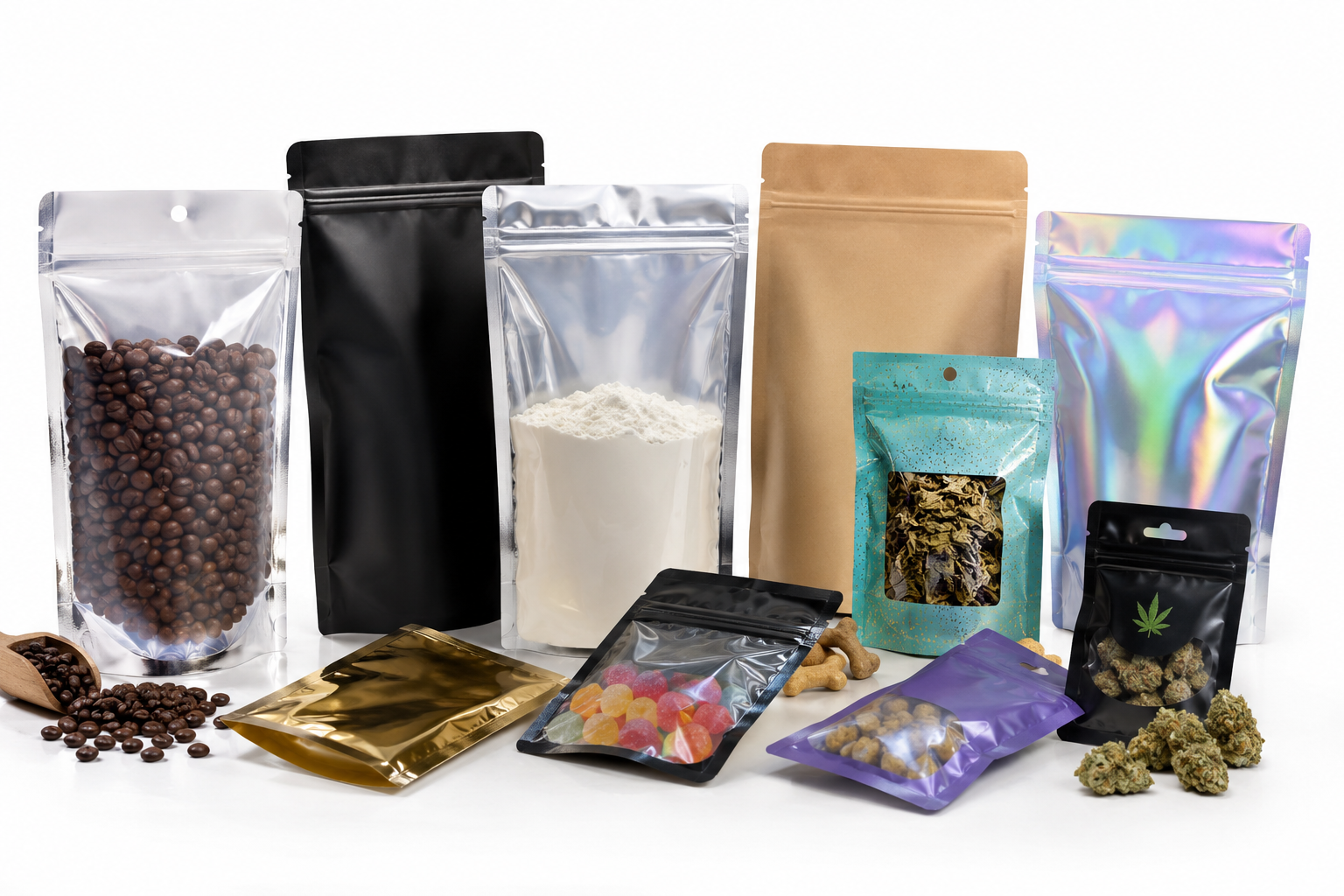
The bottom gusset on a stand-up bag folds out when filled, creating a stable base that holds the bag upright on a shelf without support. It is the dominant retail format for food, cannabis, coffee, supplements, and pet treats because it works across a wide range of product weights, offers printable surfaces on front, back, and bottom panel, and performs well in standard retail fixtures. If your product is going to sit on a retail shelf and you have not committed to a format yet, stand-up mylar bags are the starting point for the majority of categories.
Child-Resistant Mylar Bags for Regulated Products
If your product is cannabis, CBD edibles, or any regulated substance requiring child-resistant packaging under the Poison Prevention Packaging Act, the format decision is made for you before anything else applies. The Consumer Product Safety Commission requires certified child-resistant closures tested to ASTM D3475 standards. A bag described as child-resistant without supporting test documentation does not meet compliance requirements regardless of what the zipper looks like or what the supplier claims. Child-resistant mylar bags with verified ASTM D3475 certification are not a premium option for cannabis brands. They are the legal baseline. The CPSC publishes the full requirements at cpsc.gov.
Holographic Mylar Bags for Competitive Retail Environments
In dispensaries and supplement aisles where a dozen products occupy the same eye-level shelf space, the bag that gets noticed first wins the consideration before the customer reads a word. Holographic mylar bags use a prismatic surface treatment that refracts light differently at every angle. The barrier performance is identical to standard mylar. The shelf effect is not. For brands in high-competition retail environments, format and finish are doing real commercial work that print alone cannot replicate.
Kraft Mylar Bags for Natural Brand Positioning
If your brand identity is built around natural, organic, or artisanal positioning, the metallic exterior of standard mylar can work against the aesthetic you have built. Kraft mylar bags use a kraft paper outer surface over a complete mylar interior structure including the aluminum foil layer. The barrier performance is identical to standard mylar. The exterior communicates exactly what a natural brand needs it to communicate without sacrificing any of the preservation performance the product requires.
Weed and Cannabis Mylar Bags for Dispensary Markets
Cannabis packaging sits at the intersection of barrier performance, child-resistant compliance, odor containment, and state-level labeling requirements all at once. Custom weed mylar bags built for regulated dispensary markets need to protect terpene content and potency through a distribution chain, carry certified child-resistant closures, maintain complete odor containment, and display state-mandated warning text and THC disclosures on the exterior. Getting any one of those elements wrong creates compliance liability for the dispensary client, which is a fast and permanent way to lose an account.
How to Verify Mylar Bag Specs Before You Place an Order
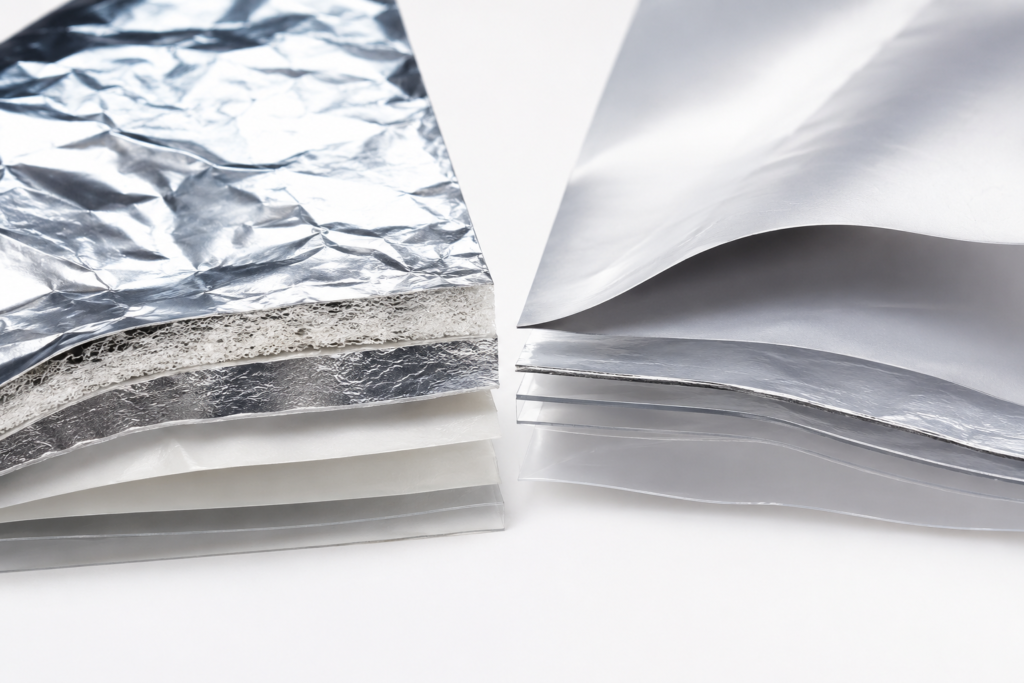
The packaging industry has a documented problem with suppliers describing metalized PET films using language that implies mylar-level barrier performance without stating the structural difference clearly. Metalized films use a thin vacuum-deposited aluminum coating rather than a bonded aluminum foil layer. The visual difference between the two is minimal. The oxygen transmission rate difference is significant, typically 10 to 50 times higher than a genuine foil laminate.
Three specific questions to ask any supplier before placing an order:
What is the OTR of this film in cc per square meter per day? A genuine mylar foil laminate answers below 0.1. A metalized film will not produce that number.
What is the exact mil thickness of the film being quoted? Not an approximation. The documented specification.
For child-resistant products: can you provide the ASTM D3475 test documentation from a third-party laboratory? If the answer requires checking with the factory, the compliance documentation does not exist in a form that protects your brand.
Why Sampling the Right Mylar Bag Before Ordering Saves You Money
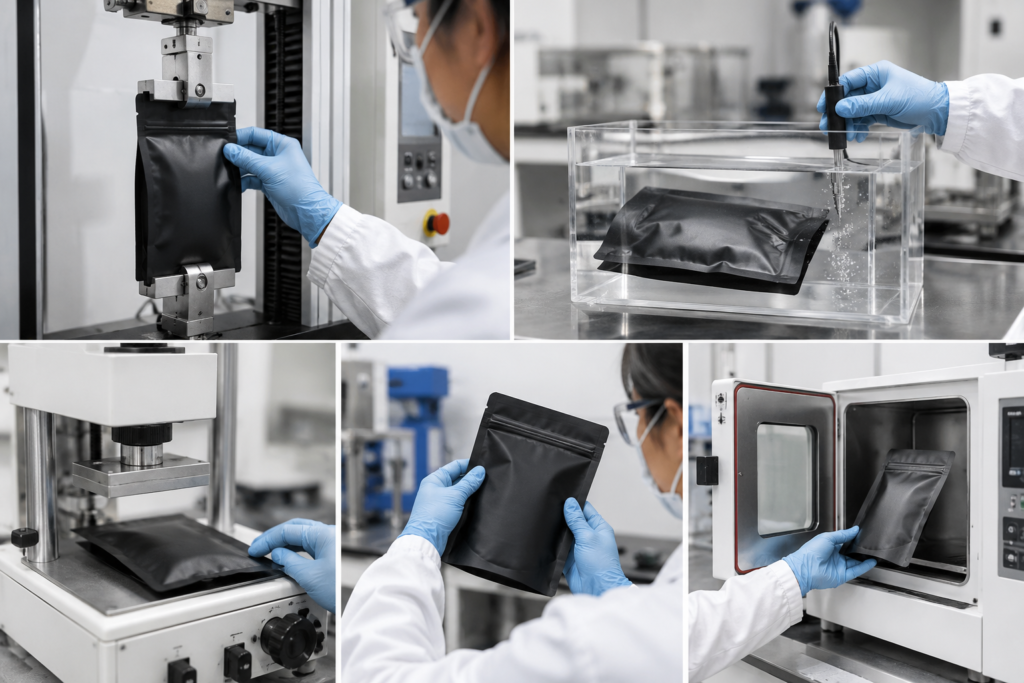
Catalogs show photography. Samples show reality. Before committing a production budget to any mylar bag supplier, request a physical sample of the exact film structure, zipper mechanism, and seal you intend to order at production volume.
Fill it with your actual product. Seal it using your actual sealing method or equipment. Store it under the conditions your product will actually experience during its supply chain journey for two weeks minimum.
Check whether the zipper operates cleanly through 20 open and close cycles. Check whether the heat seal holds under manual pressure at the corners where seal failure most commonly begins. Check whether the film shows any pinholes or stress marks at the seal edges after the storage period. These are the failure modes that appear in production and in customer hands, not in catalog photography or supplier spec sheets.
The cost of a sample run is always lower than the cost of scrapping a non-compliant or underperforming production order.
Ready to get a recommendation before you sample? Contact our team and we will give you a direct answer on film spec, format, and compliance based on your actual product. No minimum order pressure and no vague answers on what the bag is actually made of.
Frequently Asked Questions About Choosing the Right Mylar Bag
What mil thickness mylar bag do I need for food storage?
For most food applications, a 5 mil bag is the right starting point. It delivers the barrier performance and puncture resistance needed for the majority of dry food, supplement, and snack categories moving through standard distribution. A 3.5 mil bag is adequate for lightweight retail products with short supply chains. A 7 mil bag is the right choice for heavy products, long-term storage of 12 months or more, or rough distribution environments where seal integrity under stress is a priority.
How do I know if a mylar bag has a real aluminum foil layer or just metalized film?
Ask the supplier for the oxygen transmission rate of the specific film structure in writing. A genuine aluminum foil laminate produces an OTR below 0.1 cc per square meter per day. A metalized PET film will be significantly higher. If the supplier cannot produce this number on request, you are not getting a straight answer on what you are buying. Visually the two materials look similar, which is why the spec sheet is the only reliable way to verify before committing to a run.
Do all mylar bags work for cannabis packaging?
No. Cannabis packaging in US legal markets requires child-resistant certification under ASTM D3475 in most states. A standard mylar bag without a certified child-resistant closure is not legally compliant for cannabis retail regardless of how strong its barrier performance is. The compliance requirement sits on the closure mechanism, not just the film. Always ask for ASTM D3475 third-party test documentation before ordering bags intended for cannabis use.
What is the difference between a stand-up pouch and a flat-bottom mylar bag?
A stand-up pouch has a bottom gusset that allows the bag to stand on a retail shelf when filled. A flat-bottom bag has a structured rectangular base that holds its shape when partially empty and creates a box-like footprint on the shelf. Flat-bottom bags are used in premium categories, particularly specialty coffee, where the format communicates quality positioning before the customer reads anything on the label. Stand-up pouches are more versatile and cost-effective across a wider range of product categories and price points.
How long do mylar bags keep food fresh?
The bag does not determine shelf life in isolation. The film specification, the sealing method, and whether oxygen absorbers are used inside the sealed package all contribute to the final result. With a proper 5 mil or 7 mil foil laminate mylar bag heat-sealed with oxygen absorbers inside, freeze-dried food stays shelf-stable for 25 to 30 years under the right storage conditions. Dry goods like rice and beans last 5 to 10 years. Coffee and snacks remain fresh for 12 to 18 months without refrigeration. Without oxygen absorbers those numbers drop significantly regardless of the bag quality.
Not sure which bag is right for your product?
Browse the full custom mylar bag range or get in touch with our team for a direct recommendation based on your product category, compliance requirements, and order volume.