
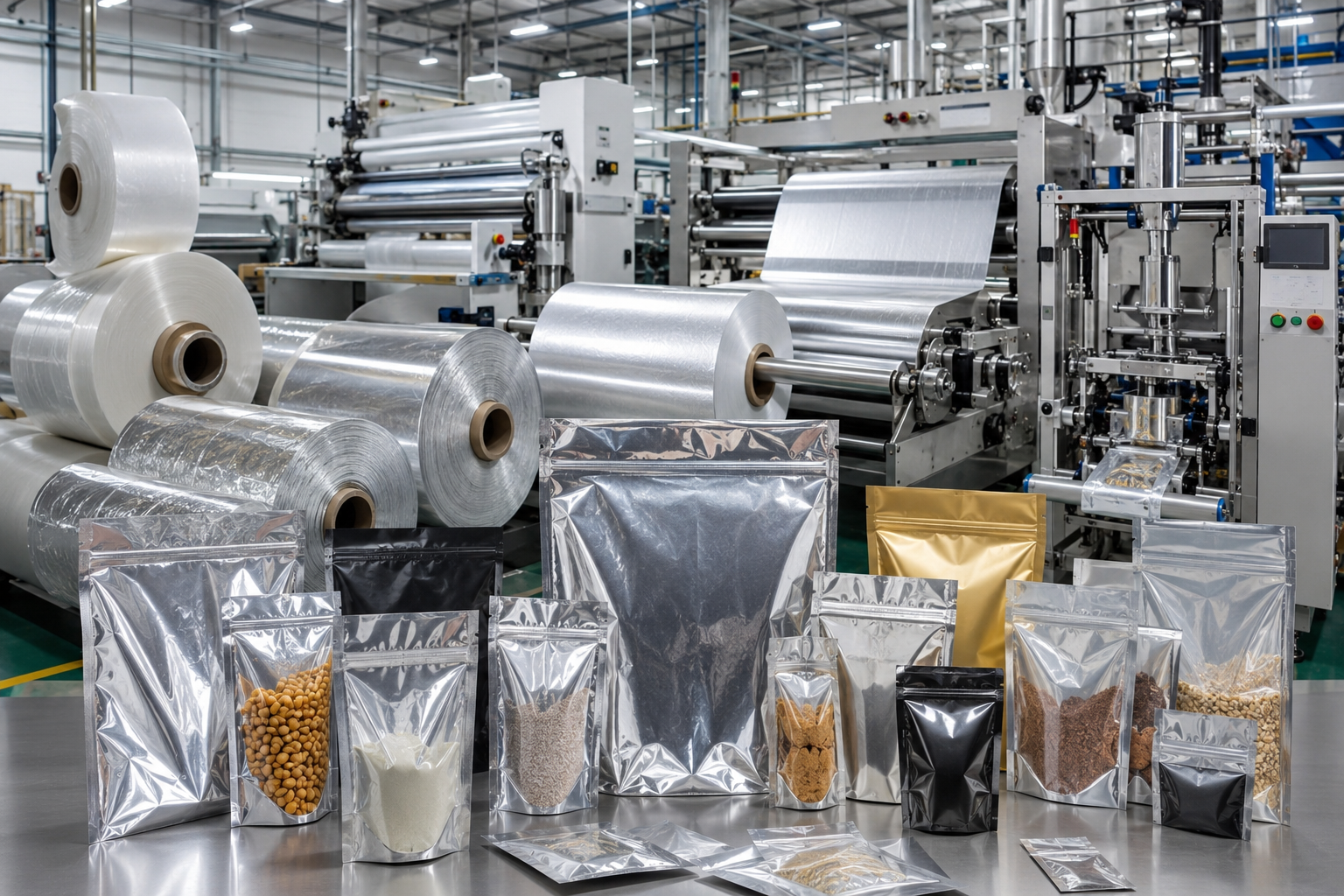
Mylar bags are produced by lamination of several thin films together, typically a Polyester (BoPET) outer layer, a foil or metallized barrier layer, and a polyethylene inner sealant layer. The layers are produced individually, then layered together through lamination prior to printing, converting into roll material, and finally cutting and sealing into the final bags. The result is a versatile and multi-layer design that is engineered to resist oxygen and odor.
Why do a bag of coffee or a pouch of dehydrated food sit on the shelf for months without spoiling? The secret is in how that bag was manufactured. Mylar bags may not be “plastic bags with a shiny coating”; they are precision-engineered laminates, and how they’re made plays a direct role in their protective ability. So let’s go through the raw film-to-finished pouch journey.
The Production of the Base Films
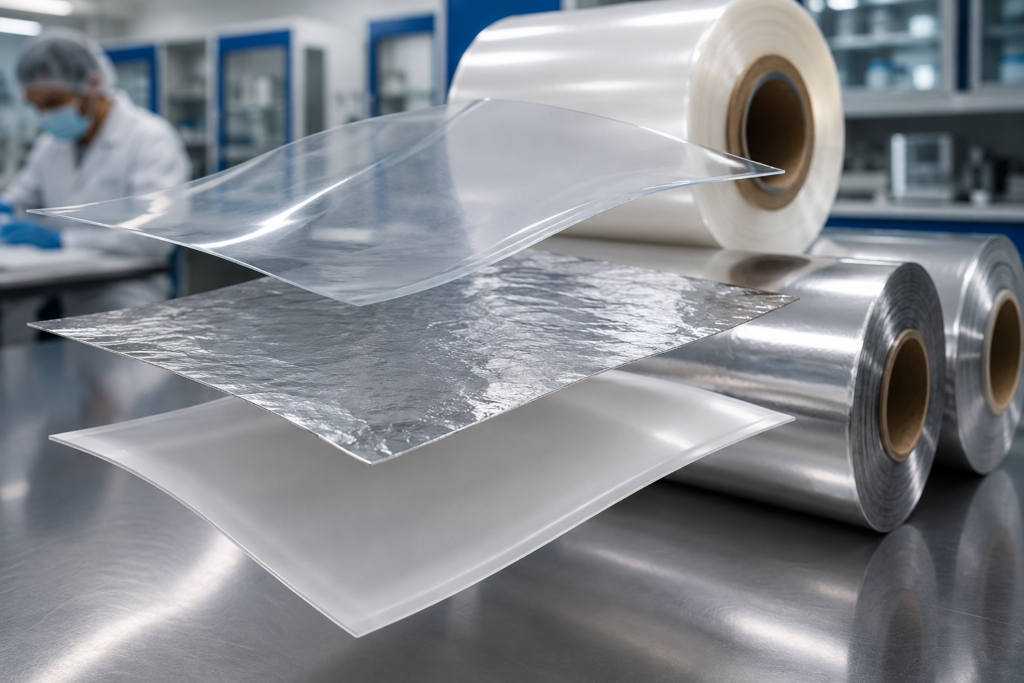
This process begins before a bag is even formed, by first using individual rolls of film. They are combined in a single cohesive cut, but first you produce each film separately. This is to ensure that they both play their respective parts within the final structure.
Polyethylene Terephthalate Film
This is the exterior layer of most Clear Mylar Bags, and it’s made by extruding polyethylene terephthalate resin into a thin sheet. After this, the sheet is stretched in both directions via a process known as biaxial orientation. It is this stretching that gives BoPET its clarity and tensile strength with dimensional stability. In the absence of it, the film would be fragile and deteriorate.
Barrier Film
According to how much protection is necessary, the barrier layer can be aluminum foil or a metallized film (a plastic film coated in a very thin layer of vapor-deposited aluminum). Foil provides almost complete protection from light, oxygen, and moisture, while metallized film provides effective but somewhat less comprehensive protection at a lower cost and with lighter weight.
Sealant Film
The innermost layer of the package that touches the food is most often polyethylene. It has a low melting point with little ionic content, which means it does not add flavor to the food. This is the layer that will effectively create an airtight seal when it fills and closes the bag.
There are just individual rolls of material at this point; the transformation actually occurs in lamination.
Lamination Of the Layers Together
Lamination is the process in which several films join as one integrated structure. Manufacturers usually use one of the two methods:
Adhesive Lamination
A coating of adhesive is placed between films, and the layers are bonded together under controlled heat and pressure. It is the most prevalent approach for multi-layer Mylar structures due to its ability to bond drastically diverse materials (polyester and foil) into one stable laminate.
Extrusion Lamination
In this process, solid polymer is directly extruded between two films to act both as the adhesive and an indirect functional layer. This technique is commonly utilized when an additional WR or SH is required.
After lamination, this film acts as a one-dimensional system; however, it retains all the characteristics of each layer – strength from polyester, barrier capabilities from foil or metallized film, and sealant properties in polyethylene.
Printing the Film
The film is brought to Mylar bags ; it usually gets printed because it’s much more efficient to print a flat roll instead of the finished pouch. Common printing methods include:
- Flexographic printing is cheap for volume
- Rotogravure printing is a perfect fit for high-volume jobs requiring vibrant, uniform color
- Digital Printing in ideal for short runs, custom designs, or rapid prototyping
- Surface printing is ink applied to the outer surface of the film
- Reverse printing: the ink is printed on the inner side of a transparent layer, so that scuffing or coming into contact with the product does not affect your design.
We use different printing methods depending on the order volume, artwork complexity,y and budget. Many brands use this stage to add their logos, list ingredients and nutritional panels, barcodes, and any information that their product category is regulated to include.
Slitting the Film
The film, which you will then eventually print and laminate, is one big roll, or a master roll, that can be several feet wide. That roll is cut (slit) into narrower rolls corresponding to the width required for the bag-making equipment. That too is a very straightforward step, but precision matters: inconsistent slitting can cause significant problems later while in the sealing and taking approach.
Shaping and Sealing the Bags
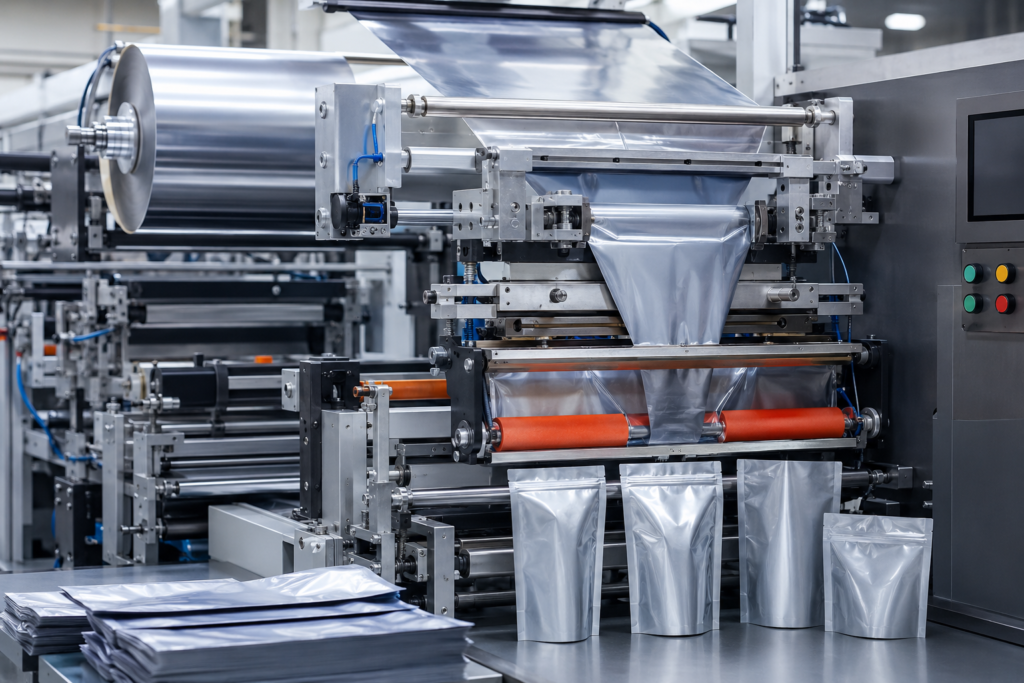
This is the point at which reps can really be bagged film. The film is inserted into the machinery that forms pouches, folding, cutting, and heat-sealing it in the desired form. The bag style being manufactured determines the exact layout itself as:
| Bag Type | Description | Key Benefit |
| Flat Bags | Three-sided sealed design | Simple Packaging |
| Stand-Up Pouches | Bottom gusseted design | Upright Display |
| Gusseted Bags | Side or bottom folds | Extra Capacity |
| Ziplock Bags | Resealable zipper closure | Easy Reuse |
Add-ons and Finishing Touches
After the basic bag body is developed, case makers can add functional elements as needed for product specifications:
- Tear notches for easy opening
- Hang holes for retail display
- Degassing valves for products like coffee that release gas after packaging
- Child-resistant closures for regulated products
- Rounded corners for a polished, retail-ready look
Finishes are applied at this step or incorporated earlier in the construction of the film. Gloss finishes generate brightness and reflectivity, matte finishes bring softness and a more premium feel, metallic finishes accentuate the high-end appearance of products, and clear windows allow consumers to view the product through the window, although they do also impact barrier performance in that part of the bag.
Quality Control and Packaging
Bags typically undergo a quality check, testing for seal strength, barrier performance, and visual inspection to determine print accuracy and film consistency before filling at the business. This step is more important than it might appear: a bag that seems fine but has a weak seal or uneven barrier layer will ultimately not be able to perform in the field as intended.
Why the Manufacturing Process Matters
Understanding how Mylar bags are made is not simply a manufacturing curiosity, as it directly accounts for the performance of these bags. The polyester layer gives strength. You can use the bags as a barrier layer that prevents oxygen, moisture, and light from penetrating. The sealant layer protects it by finishing it off. Each of the steps,s including film production and final sealing, ng has built towards a single goal: keeping what is inside the bag protected.
The thickness, laminate structure, and barrier material of a bag,g or how perfectly a bag is sealed, vary based on the quality of its process. You have two bags that can look almost identical on the outer level and behave very differently based on what is going on in those layers.
Final Thoughts
Mylar bags take a multistep sequence of fabric processing, from film production to final quality control. All of these factors play a role in determining how the bag will perform, from blocking out oxygen and moisture to an eye-catching design on the store shelf.
For businesses that choose packaging, it is helpful to understand this process: it’s not an accident that barrier performance, print quality, and seal integrity are only some of the critical components of a well-designed manufacturing process. But picking the correct Mylar pack indicates choosing a supplier that manages every one of these steps.