
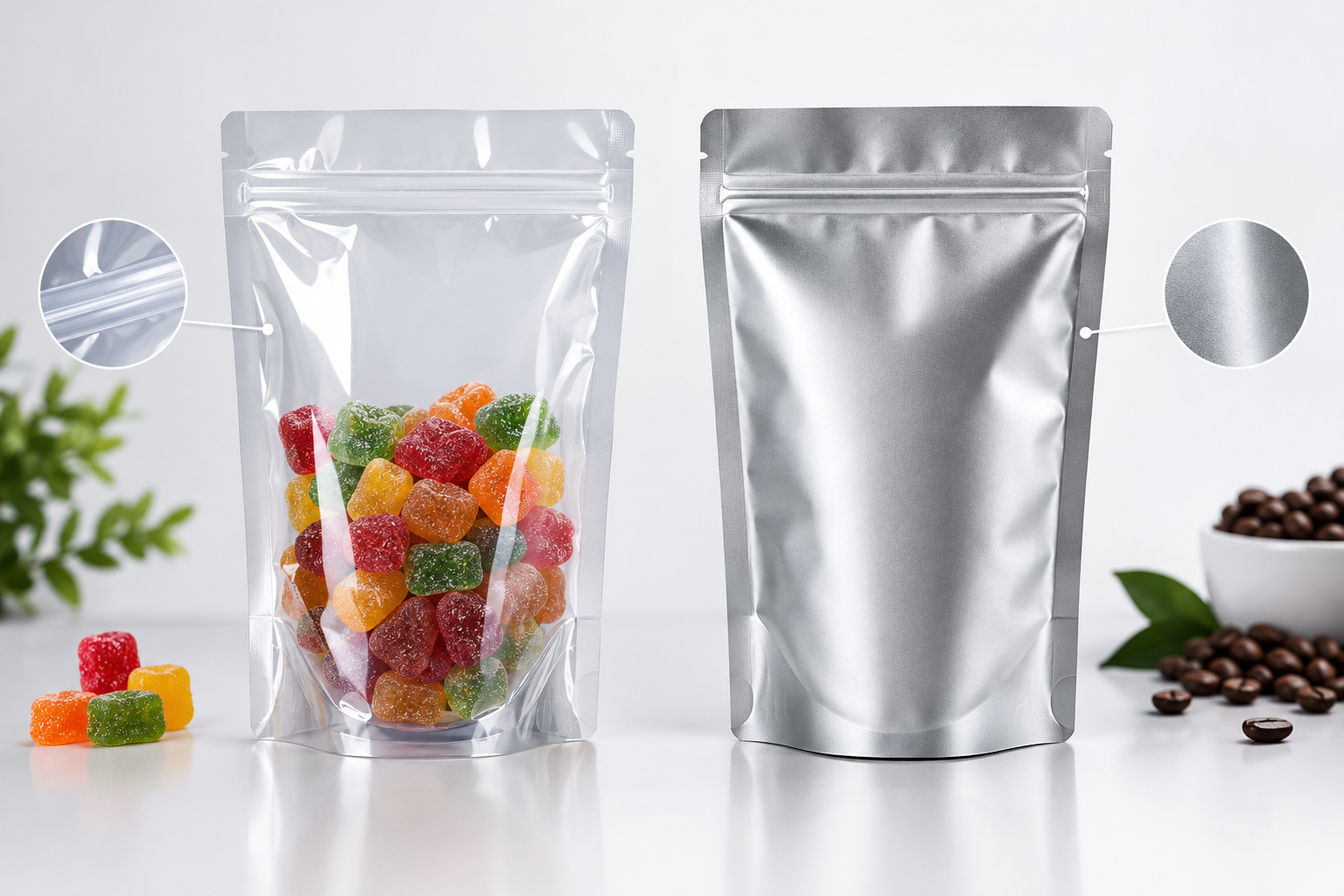
The first and perhaps the most crucial choice your making when examining Mylar bags iyou’re a PET-based structure or an aluminum foil-based structure. Both these materials are capable of being used to make solid flexible packaging, but they vary in terms of barrier protection, clarity & visibility, versatility & flexibility and cost.
Polyethylene terephthalate has good rigidity and resistance to handling, so most of the laminated Mylar bags have PET as their outer layer. Aluminium foil is a sophisticated barrier material layer in cases when products need additional protection from things like oxygen and odours.
It is important to realize that PET and aluminum foil are not immediately comparable to each other. You can tell from the cigarette paper that they are stacked together with other films. For example, a standard multi-layer high-barrier material can be composed of PET and aluminum foil with a heat-sealable layer facing inside. Whether one is better than the other depends on what the product requires from its packaging.
What Is PET in Mylar Bags?
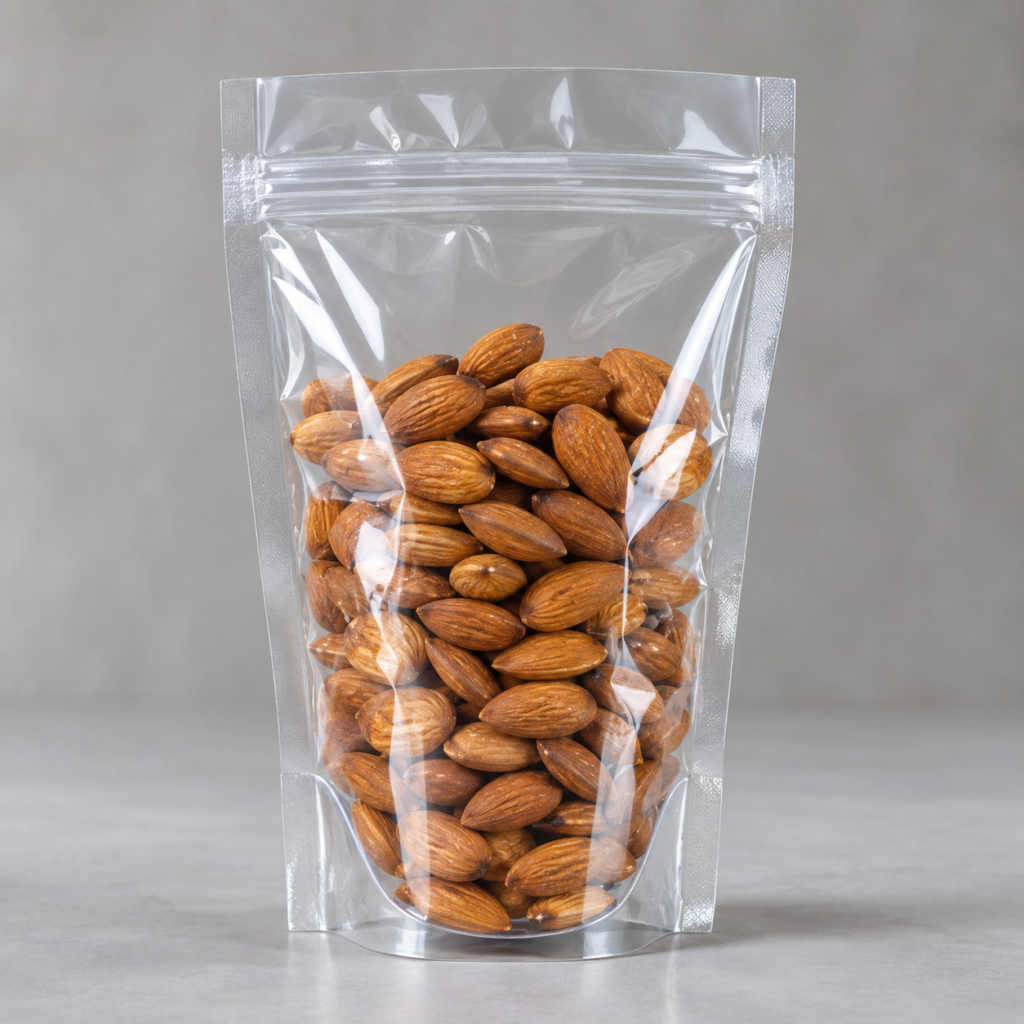
PET is actually a high-performance polyester film, which is widely used in flexible packaging. PET can be an outside layer, giving Mylar packaging bags mechanical strength and a good printing surface. PET has several useful characteristics:
- High tensile strength
- Good dimensional stability
- Resistance to normal handling
- Smooth printing surface
- Nice transparency. Using a clear non porous strutransparency usingto a lot, non-porousenvironmental conditions
Compatibility with laminated packaging structures
But for applications where permeability to O2, H2O, and light must be even lower than what a typical foil laminate provides/sustains, PET alone will not suffice. That is why PET is commonly used in conjunction with other materials.
What Is Aluminum Foil in Mylar Bags?
It is a thin layer of metal that is sandwiched between two layers of polymers in laminated flexible packaging that creates an extremely effective barrier. Transmission of: A foil layer can considerably decrease the
- Light
- Oxygen
- Water vapor
- Odors and aroma compounds
Thus, products that are prone to oxidation, destruction due to moisture or light can be easily wrapped using aluminum foil. Because the Mylar is foil-based, this type of structure typically has a non-transparent layer, so consumers are unable to see into the bag or at the product. When making visibility less important than protection from light and product privacy, that can be a boon.
Using foil laminates in specialized structures, such as a Resealable Mylar bag, where foil provides barrier protection and a zipper or other closure allows for easy open/close.
PET vs. Aluminum Foil: Key Differences
| Feature | PET-Based Structure | Aluminum Foil Structure |
| Strength | Excellent | Good, but usually laminated |
| Light protection | Limited unless modified | Excellent |
| Oxygen barrier | Moderate depending on structure | Very high |
| Moisture barrier | Good depending on laminate | Excellent |
| Odor barrier | Depends on structure | Excellent |
| Printability | Excellent | Usually printed through or over a laminate |
| Product visibility | Possible with transparent PET | Opaque |
| Flexibility | High | High when laminated |
| Puncture resistance | Good depending on thickness | Requires supporting layers |
| Typical application | General flexible packaging | High-barrier applications |
Printing on PET vs. Aluminum Foil
PET is well suited for high-quality custom printing. Its flat surface accommodates graphics, logos, product details and other branding features. It is not true that aluminum foil is commonly preferred just because it offers the best printing surface. Instead, it is integrated into a laminate where printing can be done on an appropriate polymer layer.
This is achieved by using suitable combinations of rotogravure, flexographic, digital or offset-compatible laminate structures, based on the bag construction and production requirements.
Which material is more flexible?
Aluminum foil bags can be used as flexible packaging, but their uses are varied. PET is one of thpropertiessatile differentonger dimensional stable among a stock of materials. It can be formed into pouches/bags, and you have to handle it gently because if you fold or crease the foil layer too sharply, it could rip.
Flexibility, meanwhile, can be combined seamlessly with high barrier performance through a well-thought-out laminate engineered precisely for the application. One of the reasons aluminum foil is rarely presented in isolation. It is the interaction between individual layers that gives rise to the performance of the final bag.
Selecting PET over Aluminum Foil Mylar Bags
There are a few considerations to take into account and the best choice will depend on the product, shelf life expectations, storage environment, packaging format and level of required barrier property. Choose a PET-Based Structure When:
- Strong mechanical performance
- High-quality printing
- Flexible packaging
- Good dimensional stability
- A transparent or semi-transparent appearance
- Moderate barrier requirements
- A cost-effective laminate
PET can be a good option for products that do not need high barrier protection with respect to light or oxygen. But PET does not necessarily constitute a full barrier system by definition. This should be verified by the specifications of a full laminate.
When to Choose an Aluminum Foil Structure:
When the product needs: An aluminum foil laminate is actually a better option in most cases. Foil structures are usually chosen for sensitive items, as they give an exceptional barrier once the additional structure is produced and sealed properly.
- Maximum light protection
- Strong oxygen resistance
- High moisture protection
- Odor containment
- Extended storage protection
- Greater environmental isolation
What About Resealable Mylar Bags?
Need product in resealable mylar bag: A resealable mylar bag is made for anything that needs to be opened and taken out, and needs access later. The zipper enables consumers to close the bag after use, allowing for a reduction of environmental exposure when not in use.
But the zipper is not necessarily hermetic compared to its heat-sealing properties. The consumer opens the permanent seal on first use and then accesses it via a zipper. It protects long before opening and then conveniently after opening. To do this, you must choose the ziplock mylar bags that have resealable options.
Conclusion
Flexible PET and aluminum foil are for different sort of functions. PET possesses strength and printability, while aluminum foil delivers superior light and odor protection.
Simple or modest barrier applications may only need an appropriate PET-based laminate. For example, products that require better environmental protection and prolonged storage use an aluminum foil laminate will help a lot. You can select these bags in any style and dimensions by contacting Custom Mylar Bag. We manufacture the best quality bags that are durable and highly attractive.
FAQs
Which Has Better Oxygen Protection?
When concerned about oxygen protection, aluminum foil tends to be far stronger than a simple PET film. It is well known that oxygen, as we have read above, can anaerobically oxidise and spoil products with microbial growth or produce quality changes in sensitive products just due to the oxidation reaction. When intact, a foil layer is really effective at reducing oxygen transmission.
Which Is Better for Moisture Protection?
Aluminum foil offers the best protection against moisture and is typically the film of choice when you want to keep water vapor from permeating into your product. PET can also contribute to moisture resistance, but the protection is limited, and film structure and sealant layer are deciding factors.
When plastic bags for dry foods, powders, and some ingredients need to store moisture-sensitive products, the bag should be selected according to WVTR with regard to whether it’s stored in a reasonable environment.
Which Protects Better Against Light?
Aluminium is the best option when light protection is required. Foils are laminates that will serve to shield the contents of the product from exposure to light during storage and shipping.
PET can also be transparent, translucent, or customized to have various structures, but general-purpose clear PET does not block light as thoroughly as aluminum foil.
Does PET have better durability than Al Foil?
PET gives good mechanical properties and is often used as a barrier layer in laminated packages. While aluminum foil has excellent barrier properties, unsupported thin foil can develop pinholes and be easily damaged by creasing or minor abrasion.
What Is a Foil Mylar Pouch With a Window?
The foil Mylar pouch bag with a PVC window combines the high-barrier properties of a foil-based laminate with an accompanying opening that shows some of the product to the consumer. This layout can be a nice compromise between product display and protection. The foil part helps to minimize light, oxygen, and moisture exposure, while the PVC window creates a link between customers and the product. But even just adding a window alters the barrier properties of the total package.