Call Us Now
+1 505-528-4081
| Category | Details |
| Bag Style | Die Cut Mylar Bag |
| Dimensions | Fully customizable sizes and unique shapes available |
| Order Quantity | No Minimum order |
| Material (Stock) | BoPET (biaxially-oriented polyethylene terephthalate) film, 89µ – 178µ (3.5 to 7 mils) |
| Printing Options | No Printing, CMYK, CMYK + 1 PMS, CMYK + 2 PMS |
| Finishing | Gloss Lamination, Matte Lamination, Gloss AQ, Gloss UV, Matte UV, Spot UV, Embossing, Foiling |
| Included Features | Die Cutting, Gluing, Scoring, Perforation |
| Additional Options | Zipper, Hanging Hole, Tear Notch, Stand-Up Feature, Child-Resistant Lock |
| Proofing | Flat View, 3D Mock-up, Physical Samples (upon request) |
| Turnaround Time | 5–7 Business Days |
| Shipping | Shipped flat |
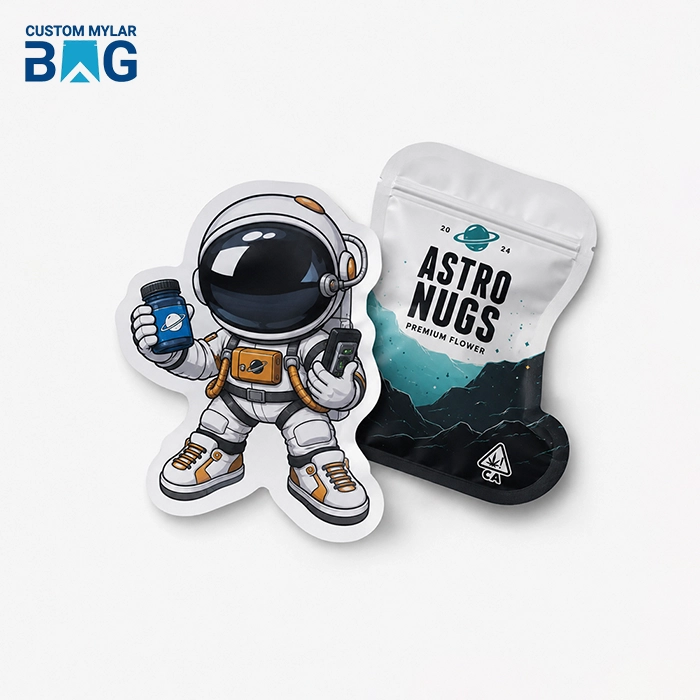
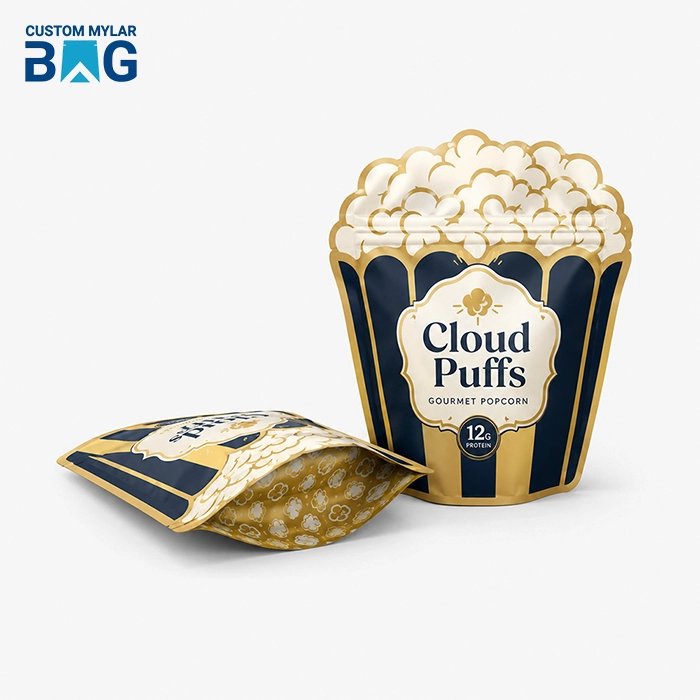
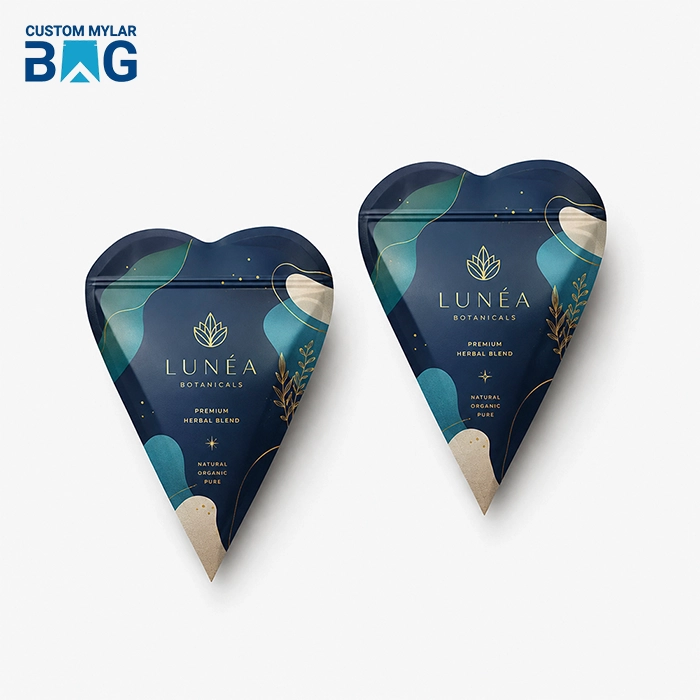
Die cut mylar bags are flexible packaging pouches cut into a custom shape rather than the standard rectangular or stand-up pouch profile using precision die-cutting technology. The base material is a multi-layer laminate that typically combines BOPP, PET, aluminum foil, and PE, giving the bag strong barrier protection against moisture, oxygen, light, and odor while allowing the bag’s outer edge to follow almost any silhouette a brand designs.
They are built for businesses that want packaging to do two jobs at once: protect the product inside and stand out on a shelf or in a photo. A standard pouch protects; a die cut mylar bag protects and differentiates, because the shape itself becomes part of the branding.
Who it’s for: food brands, coffee roasters, snack companies, supplement and nutraceutical brands, cosmetics sellers, cannabis/hemp packagers, and any small-to-mid-size business that ships a consumable or moisture-sensitive product and wants retail-grade shelf presence.
Why it matters: packaging is often the first physical touchpoint a customer has with a brand. A custom-shaped, custom-printed mylar bag signals quality before the product is even opened and the barrier material protects what’s inside during transit and storage.
A custom die-cut silhouette breaks the visual pattern of standard rectangular pouches, which increases shelf stand-out and improves click-through on e-commerce listings where thumbnail differentiation matters.
The multi-layer barrier laminate slows moisture ingress, oxygen exposure, and light degradation all common causes of spoilage in food, coffee, and herbal products.
Full-color custom printing with matte, gloss, or spot UV finishing lets brands match packaging to their existing visual identity instead of settling for generic stock bags.
A resealable zipper closure means the bag stays functional after first opening, which supports repeat use and reduces product waste a small detail that improves post-purchase satisfaction.
Ordering in bulk reduces per-unit cost significantly compared to small-batch stock packaging, making die cut mylar bags a practical choice for scaling brands.
Why it exists: Standard pouches limit brands to a handful of silhouettes. Die cutting removes that constraint. Benefit: Packaging becomes a recognizable brand asset, not just a container. Use case: A coffee brand cutting its bag into a rounded shoulder profile to differentiate from competitors using flat-bottom bags. Supporting fact: Die-cutting is performed after lamination and printing, so the shape doesn’t compromise the seal integrity when done correctly.
Why it exists: Many products (coffee, herbs, snacks) degrade quickly when exposed to air, moisture, or light. Benefit: Longer effective shelf life without added preservatives. Use case: Herbal or supplement brands needing to protect potency from oxidation. Supporting fact: The aluminum foil or metalized PET layer is what gives mylar its barrier property, distinguishing it from plain plastic pouches.
Why it exists: Consumers rarely finish a product in one use. Benefit: Freshness is maintained after the first opening. Use case: Snack or pet treat bags that get reopened daily. Supporting fact: Zippers are heat-sealed into the laminate during manufacturing, not added after. If your product needs a simpler, non-custom-shaped option with the same reseal function, see our Mylar Ziplock Bag line.
Why it exists: Generic bags don’t build brand recall. Benefit: Every unit functions as a marketing asset. Use case: A brand using foil stamping on its logo for a premium cosmetic line. Supporting fact: Digital printing suits smaller runs and variable data; rotogravure suits larger wholesale volumes with lower per-unit cost.
Why it exists: Retail and consumer convenience. Benefit: Easier first-open experience and peg-hook display compatibility. Use case: Retail snack packaging displayed on hooks in-store.
Die cut mylar bags are used across industries where product protection and brand presentation both matter:
Where and when to use them: any time a product needs to be shipped or shelved in a way that requires barrier protection and a distinct visual shape for branding particularly for direct-to-consumer and retail-facing brands competing on shelf appeal.
| Factor | Die Cut Custom Mylar Bags | Standard Stock Pouches | Plastic Zip Bags |
| Shape Customization | Fully custom silhouette | Fixed standard shapes | Fixed rectangular |
| Barrier Protection | High (multi-layer laminate) | Moderate to high | Low to moderate |
| Branding Impact | High shape + full print | Moderate print only | Low |
| Shelf Differentiation | High | Low | Very low |
| Reseal Function | Yes (zipper standard) | Sometimes | Sometimes |
| Best For | Brands scaling with identity | Cost-driven basic packaging | Short-term/internal use |
The core difference is that die cutting turns the outline of the package into a branding tool, not just the print on its surface, something flat stock pouches and plastic bags cannot offer.
Consider these decision attributes before ordering:
Who should buy custom die cut bags: brands with an established or growing product line that want packaging as a differentiator. Who might not need them yet: very early-stage businesses testing product-market fit may start with stock pouches before investing in custom tooling.
Get brand-specific packaging that protects your product and strengthens shelf presence — request a quote with your custom shape, size, and print specifications.