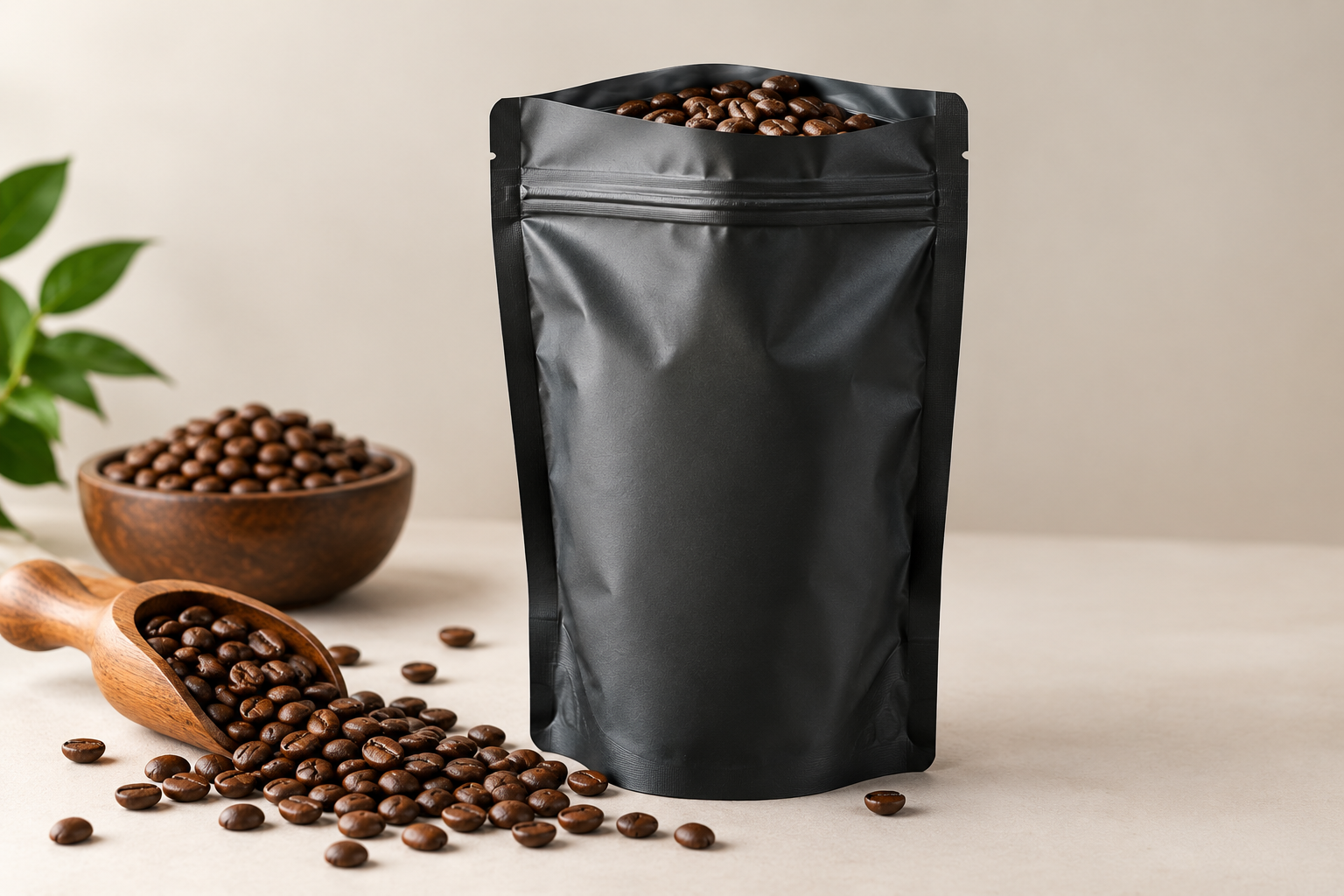
Open a pouch of coffee, take out what you need, press the zipper shut, and put it back in the cabinet. That small action explains much of the appeal of Mylar ziplock bags. They give customers a package they can return to instead of one that becomes inconvenient as soon as it is opened.
For brands, there is more to the format than adding a zipper to a pouch. The size, material structure, barrier needs, seal, printing, and way the package will be used all affect the final result. That becomes particularly important when ordering Mylar Ziplock Bags Wholesale, where a small specification mistake can be repeated across thousands of bags.
What Makes a Mylar Ziplock Bag Useful?
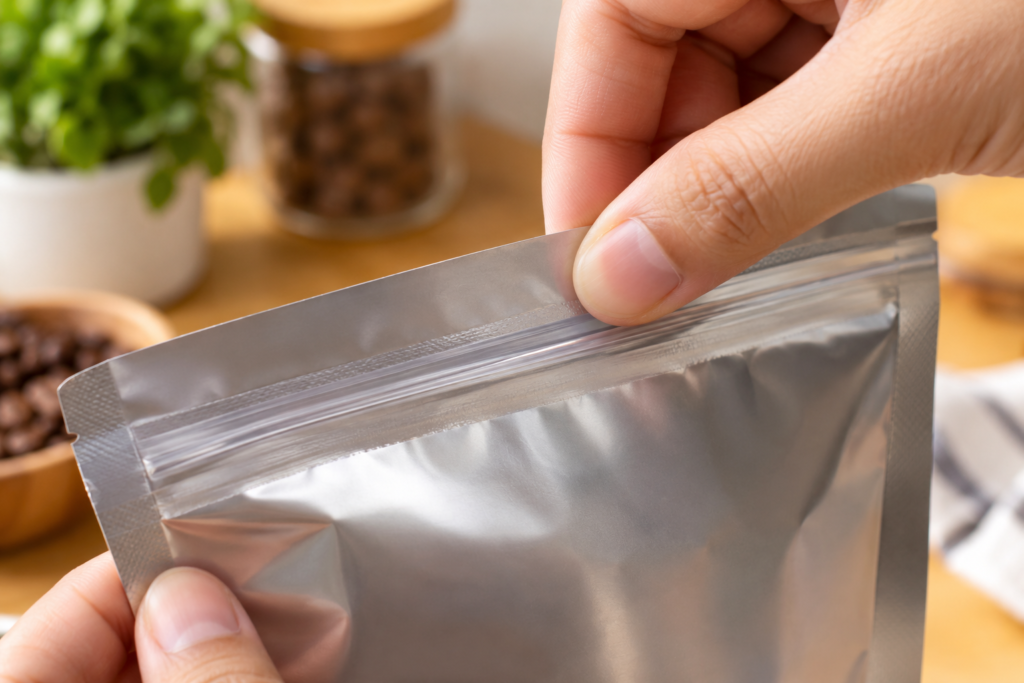
A zipper changes how people interact with flexible packaging after the first opening. Instead of transferring the remaining product to another container or folding the top of the bag, customers can press the closure back together.
That makes Ziplock Mylar Bags practical for products used over several days or weeks. Coffee, tea, dried fruit, snacks, candy, pet treats, powders, and similar products are common examples.
The zipper, however, should not be confused with the package’s original seal. Many pouches are heat sealed above the zipper after filling. The customer tears or cuts through that section to open the package for the first time and then uses the zipper for subsequent closing.
This combination gives the brand a secure initial seal while giving the customer a convenient resealable package afterward.
The Material Matters Just as Much as the Zipper
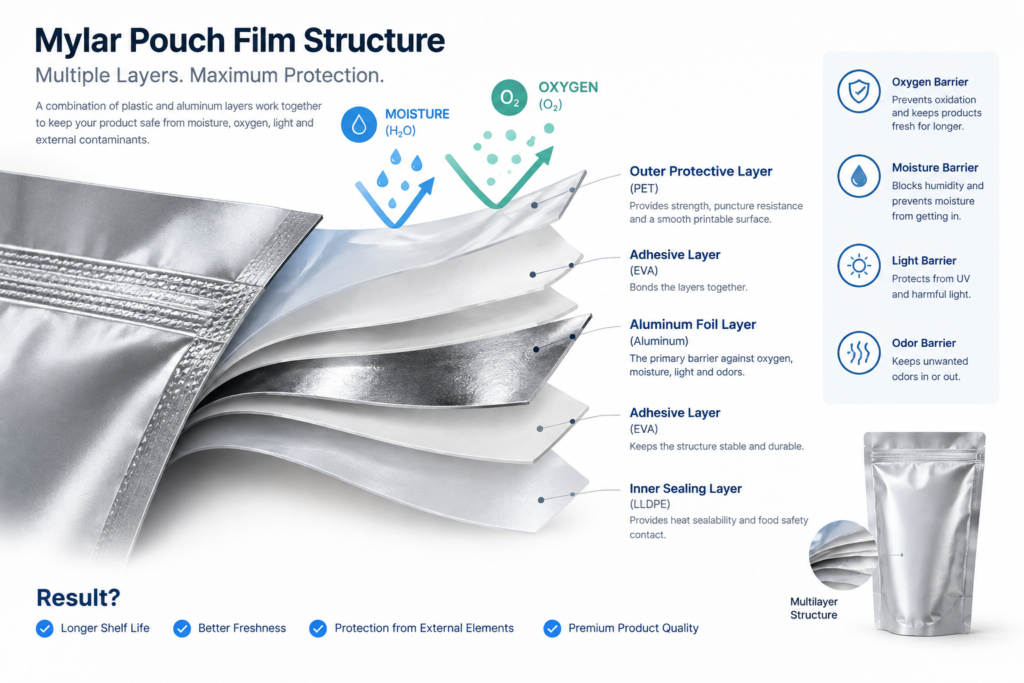
The word “Mylar” is often used broadly in packaging searches, but flexible pouches can be built from different multilayer film structures. What matters for the product inside is the actual construction of the bag.
Some products need stronger protection from moisture. Others may be sensitive to oxygen or light. Coffee, dried foods, powders, and aromatic products do not necessarily have identical packaging requirements.
This is why two Mylar Ziplock Bags that look almost identical from the outside may perform differently.
Before ordering, ask about the film structure, thickness, barrier specifications, and sealing requirements. Choosing packaging by appearance alone leaves out some of the details that matter most once the product is filled and stored.
When Large Mylar Ziplock Bags Make Sense
Going bigger sounds simple until the pouch is filled.
Large mylar ziplock bags need enough room for the intended contents without leaving an excessive amount of empty material at the top. The zipper also needs to remain easy to use when the package is full, and the pouch has to be strong enough for the additional weight.
For bulk foods, larger quantities of ingredients, pet products, or other high-volume contents, it is worth testing an actual filled sample.
Does the pouch become difficult to carry? Can the zipper still be aligned easily? Does the bottom support the product properly? Is there enough space above the contents for heat sealing?
Those answers are much more useful than choosing dimensions from a catalog and hoping they work.
Custom Mylar Ziplock Bags Give the Brand More Room to Work
A plain stock pouch can hold a product. Custom mylar ziplock bags have another job: they also have to represent the brand.
Printing can turn the front, back, and sometimes gusset areas into usable communication space. Instead of relying entirely on a separate label, a business can incorporate its logo, colors, product name, instructions, graphics, and other required information into the package design.
The challenge is not to fill every available inch.
Good printed packaging usually has a clear visual order. The customer should be able to identify the product quickly. Important information should be readable, and decorative elements should not compete with the details someone actually needs.
Matte, gloss, metallic, clear-window, and other finishing choices can further change the look, depending on the pouch construction and printing process. These decisions work best when they are made alongside the package design rather than added at the end.
What Does “Smell Proof” Really Mean?
“Custom smell proof ziplock bags” is a common search phrase, but brands should be careful with the claim itself.
Odor control does not come from the zipper alone. It depends on the complete package: the film structure, barrier properties, seams, closure, and whether the pouch is properly sealed.
A zipper is useful for closing the package again after opening, but a resealable closure should not automatically be treated as proof that a bag will completely contain every odor.
If odor barrier is important to the product, discuss that requirement with the packaging supplier and review the material specifications rather than relying only on the phrase “smell proof.”
That gives the brand a much stronger basis for selecting the pouch and describing its performance accurately.
Heat Sealing Still Deserves Attention
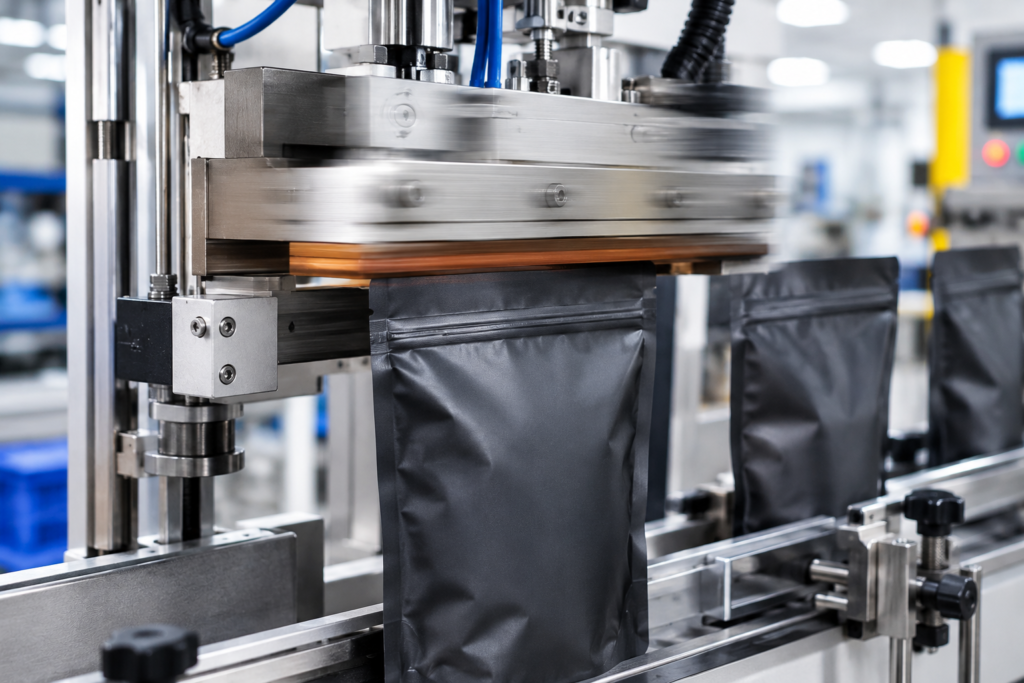
The zipper gets noticed because customers use it repeatedly. For the packaging team, the heat seal deserves just as much attention.
If a pouch is going to be sealed after filling, its material must work with the chosen sealing process. Temperature, dwell time, pressure, film construction, and equipment can all affect the result.
A good approach is to test the actual pouch on the equipment that will be used in production.
Check the seal after the package is filled. Look for wrinkles, weak areas, contamination around the sealing zone, or other issues that could affect consistency.
This is especially important before moving from samples to a large wholesale run.
What to Check Before Ordering Mylar Ziplock Bags Wholesale
Unit price is an obvious consideration when ordering in volume, but it should not be the only number driving the decision.
Before approving a wholesale order, check the complete specification:
- Dimensions: Test the width, height, gusset, and usable fill area with the actual product.
- Material structure: Match the film and barrier performance to what is being packaged.
- Zipper: Open and close samples repeatedly to see how the closure feels in normal use.
- Seal area: Make sure there is enough room for your filling and heat-sealing process.
- Printing: Review artwork requirements, colors, print method, and proofing before production.
- Finish: Consider how matte, gloss, metallic, or other treatments will affect both appearance and handling.
- Quantity: Compare the minimum order with realistic sales and inventory needs.
- Lead time: Leave room for sampling, artwork approval, manufacturing, and shipping.
Most importantly, test a filled pouch rather than approving an empty sample alone. Flexible packaging changes once weight and volume are added.
A Zipper Should Make the Package Easier to Live With
Packaging is often judged in the few seconds someone sees it on a shelf or product page. A resealable pouch has a much longer job.
The customer may open it every morning for coffee, several times a week for snacks, or repeatedly until the product is finished. The zipper should line up without a struggle. The bag should remain manageable as the contents decrease. Printed areas should survive normal handling reasonably well.
These details are easy to overlook during artwork approval, but they are exactly what customers experience after purchase.
That is why physical sampling matters. Open the pouch. Fill it. Seal it. Store it. Use it several times. A mockup can show whether the artwork looks attractive; it cannot show whether the package is pleasant to use.
Build the Custom Package Around the Product
There is no single Mylar ziplock format that works for every product. One brand may need a compact stand-up pouch with a matte surface. Another may need a large bag, stronger barrier structure, bold printed graphics, or more room for product information.
Start with what the contents actually require. Then decide on the dimensions, zipper, seal, material structure, printing, and finish.
This also makes custom packaging decisions easier. Instead of adding features simply because they are available, you can choose the ones that have a purpose for the product or the customer.
For brands ordering custom mylar bags, that balance is what matters. The packaging should look like your brand, work with your production process, and remain convenient after it reaches the customer’s hands.
A zipper may be a small part of the pouch, but when the whole package is designed around real use, it becomes one of the reasons customers can keep using that package comfortably from the first opening to the last.
FAQs
Are Mylar ziplock bags resealable?
Yes. A zipper allows the pouch to be closed again after opening. Many packages also use a separate heat seal above the zipper for the initial sealed package.
Can Mylar ziplock bags be custom printed?
Yes. Depending on the supplier and pouch construction, custom mylar ziplock bags can include logos, colors, graphics, product information, and different surface finishes.
Are large Mylar ziplock bags suitable for bulk products?
They can be, but the pouch dimensions, film strength, zipper, bottom construction, and sealing area should be tested with the actual product and fill weight.
Are all Mylar ziplock bags smell proof?
No. Odor-barrier performance depends on the complete material structure, seams, closure, and seal. A zipper by itself does not establish that a package is completely smell proof.