
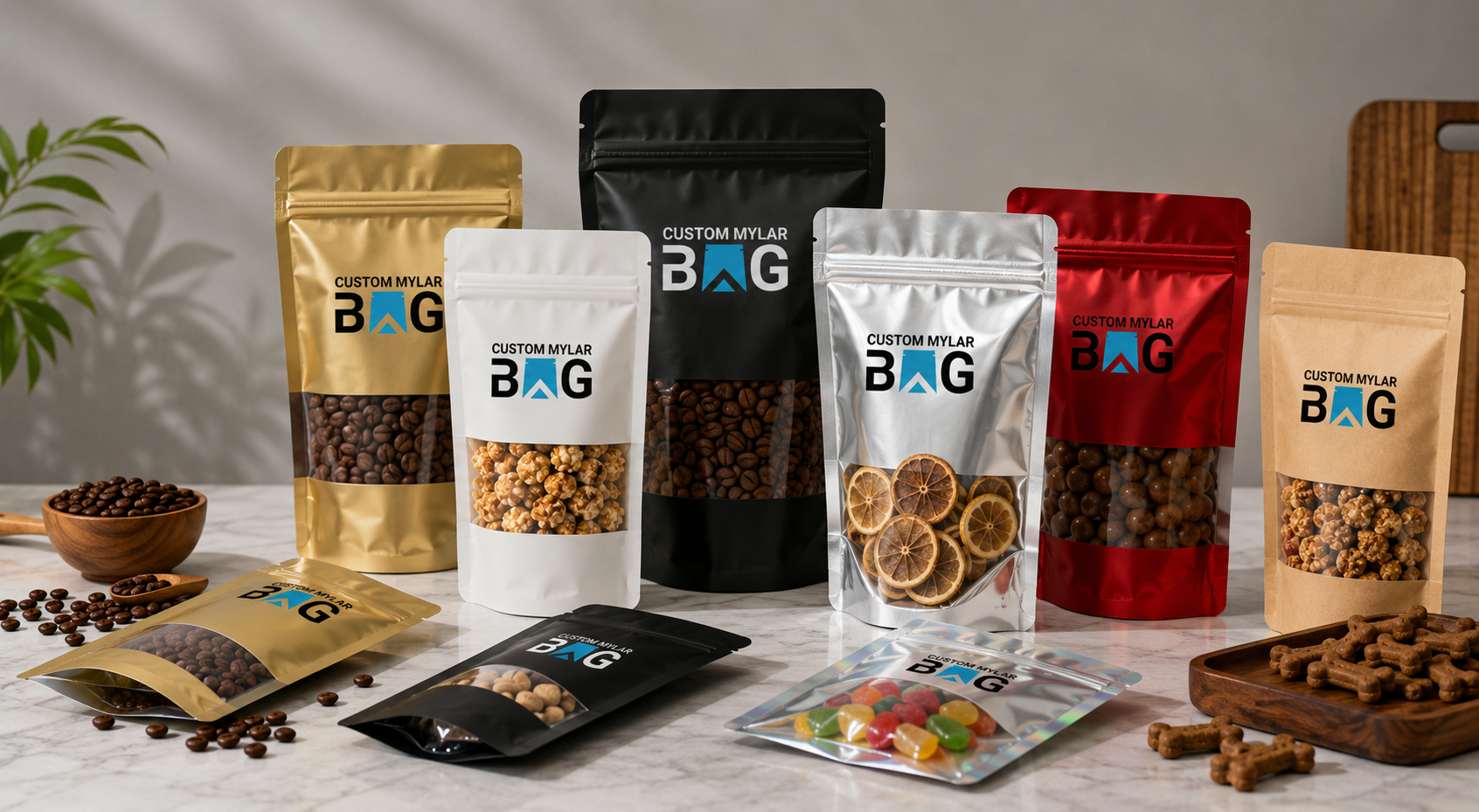
Your business needs packaging that does more than just protect the product. There are several products that need protection from oxygen and moisture. Besides this, some products are sensitive to odors as well. For such products, Mylar bags are the best option.
These bags are a flexible packaging solution that is lightweight and durable and is much more useful than an ordinary plastic packaging bag. Multiple industries use Mylar bags for protection during storage and shipping. Based on the manufacturing material, these bags provide protection from undesirable factors for decades. Let’s read the blog and get an idea about the nature and usefulness of custom printed Mylar bags.
How Are Mylar Bags Made?
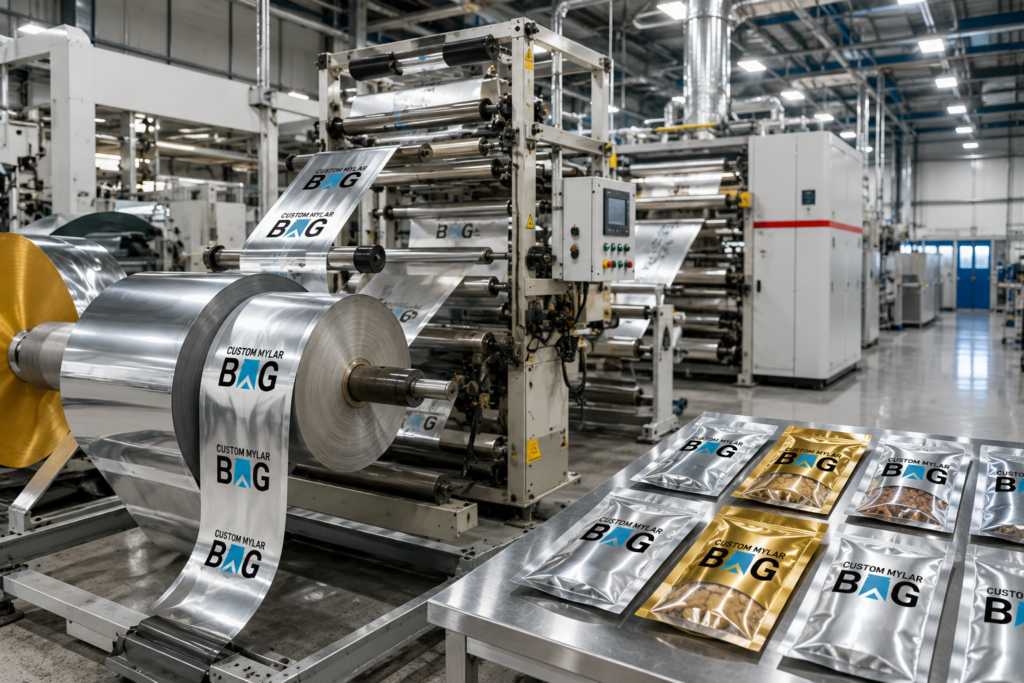
Mylar packaging bags are manufactured with a combination of multiple layers that give the bags their specific qualities. A typical structure of Mylar bags includes the following:
| Layer | Material | Purpose |
| Outer Layer | Polyester (BoPET) | Strength, printing |
| Barrier Layer | Aluminum Foil | Blocks oxygen |
| Sealant Layer | Polyethylene | Heat sealing |
Why Use Mylar Bags?
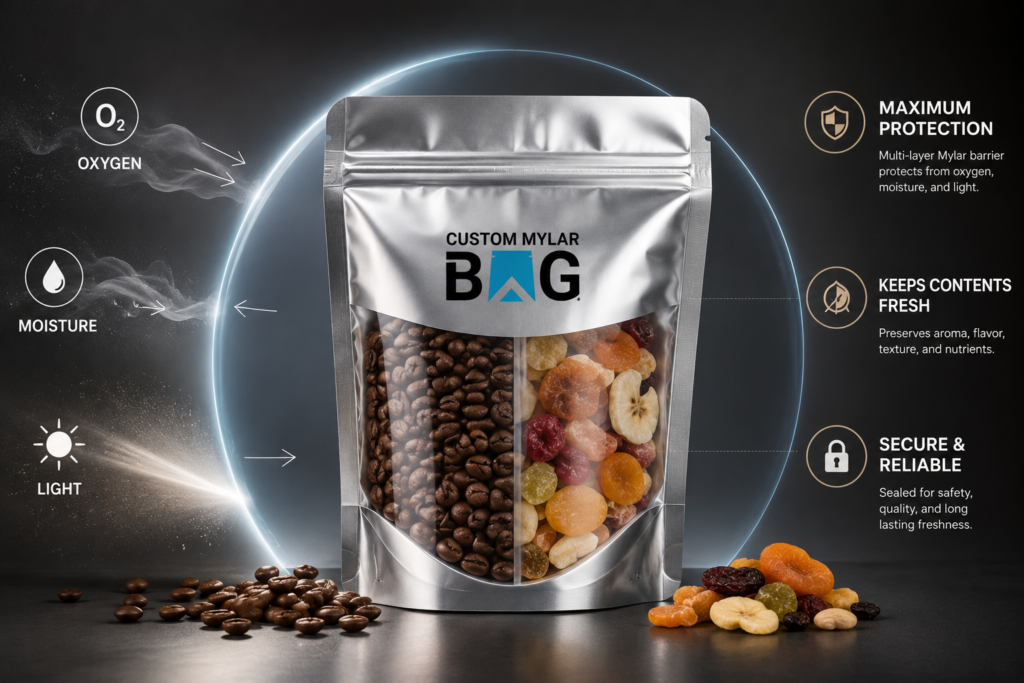
Mylar bags provide superior product protection in a flexible package. They have a layered spray barrier structure that reduces these risks, since products can be degraded due to exposure to oxygen and humidity. You can also get protection against UV light and temperature fluctuations or contamination. Key benefits include:
Oxygen Barrier
This feature affects freshness, flavor, and shelf life. You can also incorporate oxygen absorbers for long-term dry storage.
Moisture and Light Protection
It prevents spoilage or loss of texture in moisture-sensitive products. Metallized or foil structures block both UV and visible light.
Odor Protection
Limits the transfer of odours and volatile compounds.
Durability
It is tear-resistant and puncture-resistant but not puncture-proof. Less space-consuming and comes in several shapes that include flat bags and gusseted mylar bags.
Common Applications
They are designed to withstand use while offering good barrier protection and flexibility more broadly, even during the various steps that a product has to go through, so products stay protected during storage, handling, and transportation.
| Application | Key Benefit | Common Feature |
| Food Storage | Freshness Protection | Barrier Layers |
| Coffee Packaging | Aroma Protection | Degassing Valves |
| Snack Packaging | Moisture Protection | Resealable Zippers |
| Pet Food | Oxygen Protection | Barrier Films |
| Pharma Packaging | Product Protection | Compliant Materials |
| Electronics Packaging | Moisture Protection | Desiccant Packets |
Thickness
Thickness has a similar direct impact on durability but not barrier performance alone as resistance is more dependent on the laminate structure (in mils). The right specification will depend on the product, filling method, shipping conditions, and desired shelf life.
Printing Options
Traditional techniques involve flexographic, rotogravure, digital, surface and reverse printing. Your choice of printing method will depend on order volume, complexity of design, and budget. Gravure and flexo are ideal for high volumes, while digital suits shorter runs and variable designs.
Closures and Add-Ons
Some of the options include a resealable zipper, tear notch, hang-hole, rounded corners, degassing valve, child-resistant closure, and customized shapes, etc. Feature selection should match the product. Valves for coffee and zippers for snacks.
Oxygen Absorbers
Good for removing residual oxygen in airtight low-moisture foods, but they do not fix bad seals or poor packaging. Always validate against product type and food-safety requirements.
Food Safety
Just because a bag is called “mylar” doesn’t mean it’s food-safe. Safety is related to the complete structure – i.e., films, inks, adhesives, and sealants. Verify regulations (FDA, EU, UK) of your target market and ask suppliers for documentation.
Choosing the Right Bag
Begin by assessing the oxygen, moisture, light, odor,r and impact sensitivity of your product. Next, consider capacity, thickness, closure type, printing and finish requirements,s and shelf-life requirements and your filling and sealing equipment. For food products, permanently verify food-contact compliance along with your provider. You can see the table below to get an idea about the bets choice:
| Feature | Mylar Bags | Regular Plastic Bags |
| Oxygen Barrier | High | Low–Moderate |
| Moisture Barrier | High | Moderate |
| Light Protection | High | Low |
| Durability | High | Moderate |
| Heat Sealing | Yes | Depends |
| Long-Term Storage | Excellent | Limited |
| Custom Printing | Available | Available |
Final Thoughts
Mylar bags are one of the versatile high-barrier packaging solutions for food, coffee, snacks, pet products, and pharmaceuticals or electronics. However, the performance is structure-, thickness-, and seal-method-dependent and must be assessed based on your product’s real needs rather than solely by the label “Mylar.” With all the information on barrier strength, compliance, and supplier documentation, we can confidently evaluate what packaging will protect your product AND your brand.